
Years ago, the City Hall in Stratford, Ontario, was saved from destruction
Along with other students from the high school I attended in Montreal in the 1960s, over the past decade I’ve helped to organize picnics in Toronto and Southwestern Ontario.
These events began following the Malcolm Campbell High School Sixties Reunion at the Old Mill in Toronto in October 2015. For the spring and summer of 2026, our first picnics are in Toronto on May 5 and London on May 21.
Click here for previous posts about MCHS picnics >
A previous post about picnics is entitled:
We remember Gina Cayer
At the above-noted post, Soryl Shulman Rosenberg, who was a phys ed teacher at MCHS in the 1960s, wrote on Feb. 12, 2026:
Dear Jaan,
I was so sorry to hear about Gina’s death. When I attended an MCHS reunion in Toronto she took me under her wing and I had a great time after so many years of not seeing graduates. She was an unusual incredible person who had so much to offer. I called her at the beginning of her illness and she sounded so positive. That’s who she was – full of energy and spirit. So sorry.
In reply, I wrote at the above-noted post:
Dear Soryl,
Your heartfelt message underlines for me what an incredible person Gina was. I feel immensely fortunate that I had the opportunity to get to know her. I initially got to know Gina when she joined the organizing committee for the MCHS sixties reunion held at Old Mill Toronto. She made a hugely positive contribution to the organizing effort. I will cherish her memory and will remember with fondness the enthusiasm and attention to detail that she brought to the many collaborative tasks, in which so many of us participated, in bringing people together. Gina remains in our hearts and memories forever.
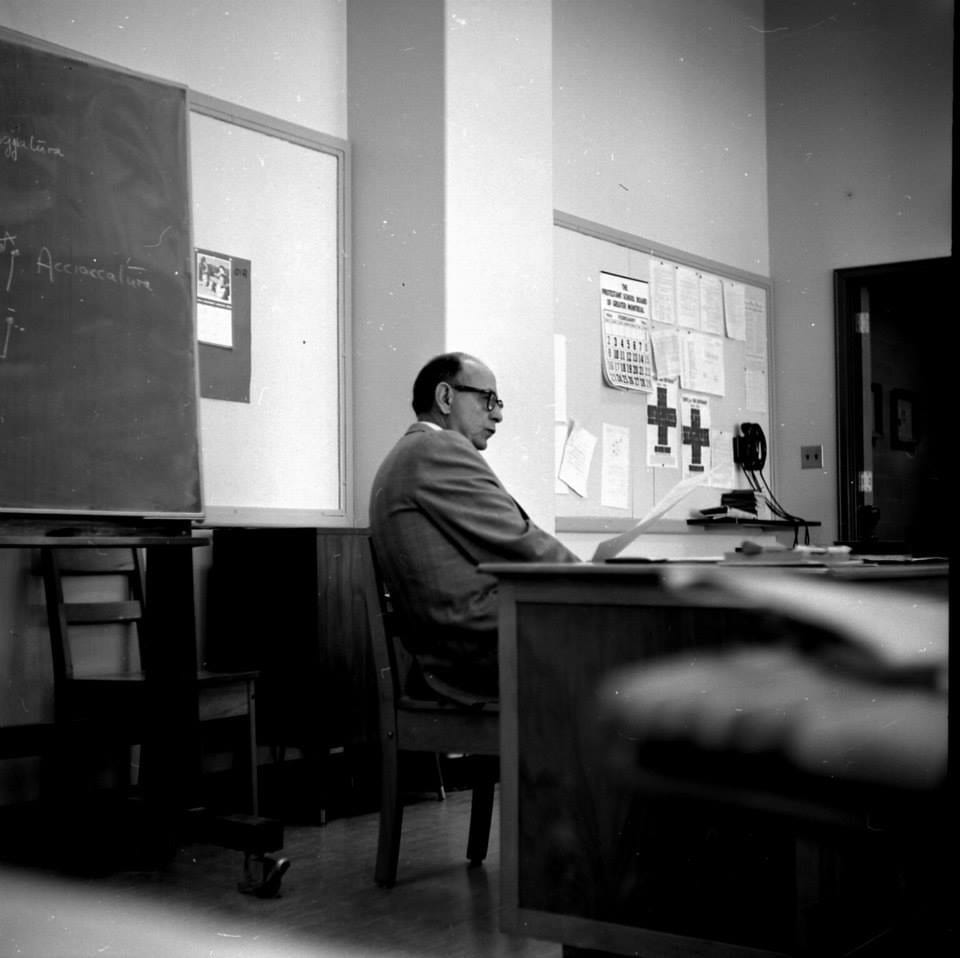
Photo of Mr. Hanna, posted by Klaas Vander Baaren on June 16, 2014 at MCHS ’60s Reunion Facebook Group. I believe there may have been an article about Mr. Hanna in Macleans magazine in the 1960s. If I recall correctly, he had worked as a government official in Egypt.
Toronto, May 20, 2025
Bob Carswell spoke at our picnic in Toronto on Tuesday, May 20, 2025, about the post-traumatic stress disorder (PTSD), experienced by his mother and father, both of whom served in British air force during the Second World War. Bob noted that his mother experienced PTSD during the war itself while his father experienced the effects of wartime stress years later.
London, May 30, 2025
We met on Friday, May 30, 2025, at Lynn and Mike Legge’s home in London. At that meeting one of our attendees recalled that Mr. Hanna was one of his favourite teachers.
We spoke about Mr. Hanna at a previous post:
Graeme Decarie mentions that Mr. Hanna was principal of a high school way up the Ottawa River
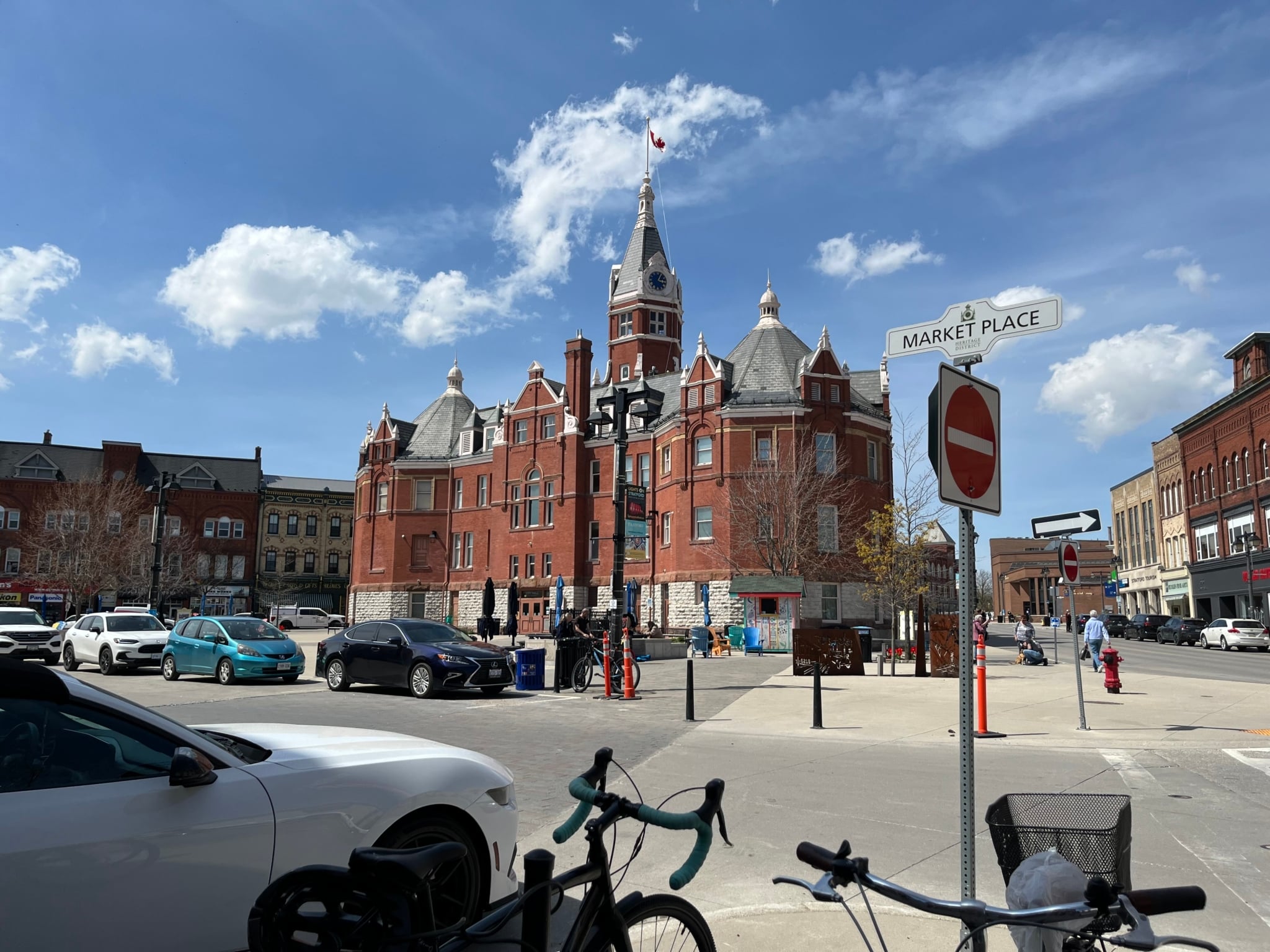
City Hall, Stratford, Ontario, May 4, 2026. Jaan Pill photo
Stratford, July 16, 2025
On Wednesday, July 16, 2025, when we met in Stratford, Scott Munro and I spoke about the fact the current City Hall was saved from demolition many years ago as noted in an online documentary entitled Saving City Hall.
A blurb from the online video reads:
In the 1960/70s, the historic city hall of Stratford, Ontario, was in danger of demolition. It was a challenging time for the community, but thanks to the determination of seven remarkable women, the building was ultimately saved. Dean Robinson, an author from Stratford with a background in local history explores the architectural significance of the city hall, as well as the broader historical context of the time. This video showcases the perseverance of a community in the face of change and the power of collective action to preserve cultural heritage. By shedding light on the efforts of the seven women, we hope to inspire future generations to stand up for what they believe in and fight for the preservation of their cultural landmarks. Join us on this journey as we take you back in time to explore the struggle in Saving City Hall.
I’m reminded of a citizen effort which over a century ago saved the parkland system in Stratford from destruction as outlined in a previous post entitled:
Stratford, Ontario: Canada’s cultural tourism destination
An excerpt reads:

The Festival Theatre, designed by architect Robert Fairfield in close consultation with the Stratford Festival board of directors and theatre staff, was awarded the Vincent Massey Gold Medal for Architecture in 1958. The theatre features a thrust stage. Jaan Pill photo
By the early 1900s, land along the Avon River had been turned into industrial wasteland. Thomas Orr, working with Montreal landscape architect Frederick Todd, arranged for existing parks to be joined together and cleaned up, creating a pastoral scene.
Then along came a proposal, by the Canadian Pacific Railway, to build a railway along the river. All at once, the park system was under threat. Many residents supported the proposal on grounds it would bring prosperity. Orr argued that keeping the parkland intact made better economic sense. A referendum in 1913 saved the parkland by a margin of 127 votes. Patterson and others have noted that, had the park system been destroyed, the Festival would not have happened.
Click here for previous posts about Stratford >
Toronto, Aug. 12, 2025
We met again on Tuesday, Aug, 12, 2025, in Toronto in Bob Carswell’s backyard.
Woodstock, Sept. 30, 2025
And we meet on Tuesday, Sept, 30, 2025, in Woodstock. Among the things we talked about was the history of Canadian agriculture. I am reminded of a book entitled How Agriculture Made Canada: Farming in the Nineteenth Century (2012) by Peter A. Russell.
A quote, pages 9-10 (I’ve added a paragraph break) from the book reads:
For the Prairies, the initial legislation and the initial settlement it attracted reflected the contrasting agricultural developments in the two central Canadian provinces. In the new Dominion, the conservative nationalism of George-Etienne Cartier sought to reserve a place for francophones in the framing of Manitoba’s constitution, in the schools, and in the lands to be reserved for the children of Metis and prospective Quebec settlers. The promise was not fulfilled. Several causes have been cited: the failures of the federal government or of the Quebec episcopate, the influence of the Orange Lodge, the weather cycle.
But the case made here is that the underlying cause was demographic: relatively few Quebec francophone families had the means and the interest to migrate west in a given year. That province’s surplus rural population was already headed overwhelmingly for urban jobs, if not in Montreal, then in New England. Quebec’s nationalist and clerical elites strongly encouraged those farmers’ sons who wanted to begin a new farm to stay in the province. In the two decades following Confederation, several thousand Quebecers did migrate to the West, not only to Manitoba but also to southern Alberta and the valleys of British Columbia, where they established ranches and fruit farms. But these Quebecers were overwhelmingly English-speaking, many coming from the Eastern Townships, drawn by the prospect of continuing extensive farming in a new, low-cost area.
An additional quote, pages 280-81, reads:
The contrasting land-hungry nationalisms of Quebec and Ontario profoundly shaped the settlement of Rupert’s Land. Quebec’s clerical nationalist elite, well represented at Ottawa, sought to reserve a place in the new region for emigrant Canadiens, especially those already in the United States. In Ontario there had been an expansionist movement for over a decade demanding annexation to open a new agrarian frontier. The first conflict between the two opposing interests arose over the terms of entry and the first institutions provided for the new region. The Manitoba envisioned by George-Etienne Cartier was a bilingual, bicultural province, with two equal school systems – Catholic and Protestant – in which 1 .4 million acres would be set aside for the Metis, and in which (shortly) there would be extensive blocks of land reserved for the settlement of Canadiens. As Parliament passed the Manitoba Act, the federal government sent a military expedition with a British commanding officer and British troops, but including Ontario militia, to hunt down the local government with which it had just finished negotiating.
Leave a Reply
Want to join the discussion?Feel free to contribute!